Influence, Impact and the Future of Ops
Written by Liam, CEO/ Founder
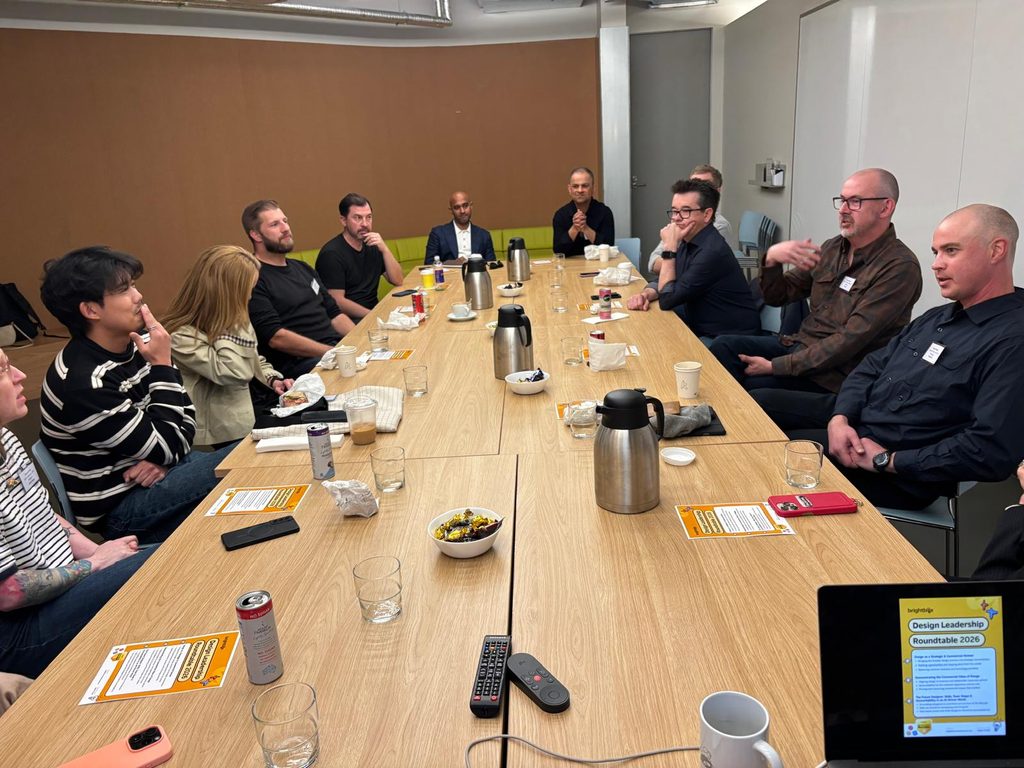
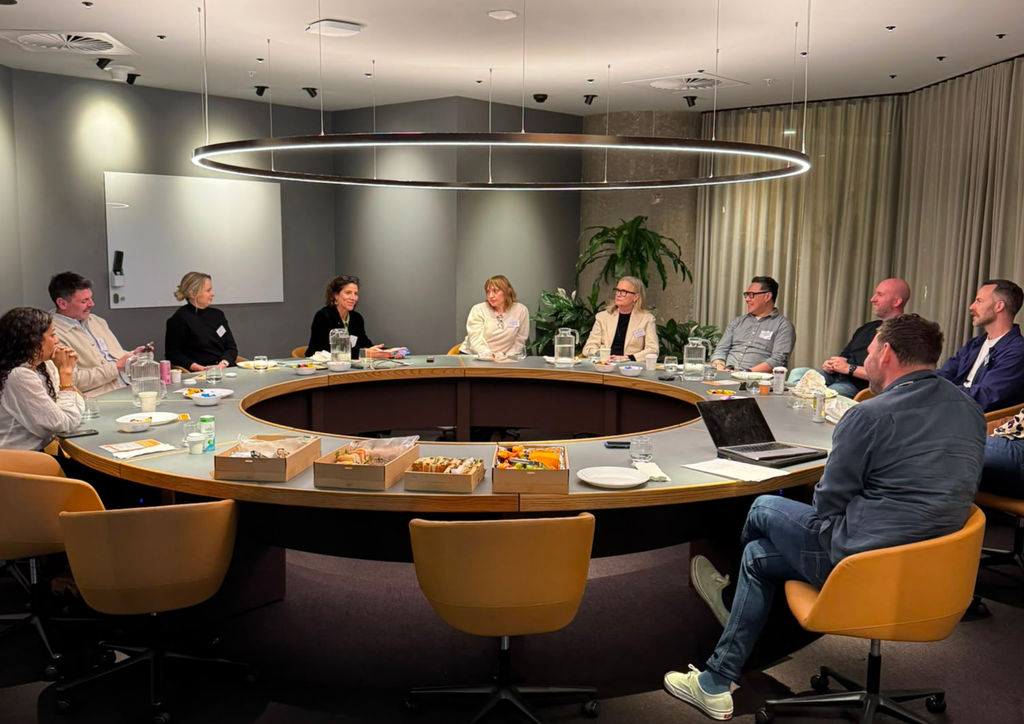
Last week, I had the privilege of facilitating our first-ever DesignOps Leadership Roundtable. This session brought together a cross-section of leaders from some of Australia’s most progressive design organisations.
Over the past decade, I’ve watched design evolve from a craft discipline into a complex ecosystem, one that now requires the orchestration of people, processes, tools, and systems at scale.
And that’s where DesignOps and ResearchOps come in: they’re the glue that makes it all work.
This session wasn’t about theory. It was about real-world stories—the challenges, wins, and trade-offs that come with building, scaling, and protecting DesignOps within organisations of all shapes and sizes.
1. Influence Without Authority
We opened with a question that every Ops leader recognises:
“How do you demonstrate value when you don’t have formal authority?”
It sparked a rich discussion about influence, language, and trust.
Many shared that the most effective way to demonstrate value is to act before you advocate – solve a tangible problem first, then communicate its impact in the language that resonates with leadership. In some organisations, that language is speed and efficiency; in others, it’s consistency, culture, or cost avoidance.
Several people reflected on the balance between showing operational value through metrics and telling human stories of impact – stories that show how DesignOps quietly enables creativity, reduces friction, and gives teams breathing room to do their best work.
The takeaway: DesignOps doesn’t always lead from the front – but it leads with presence, influence, and evidence.
2. Educating Stakeholders on What DesignOps Really Is
Another theme that surfaced quickly was misunderstanding; that DesignOps is often seen as “admin,” “governance,” or “support.”
Leaders discussed how they’ve worked to reframe that perception —not through slides or definitions, but by embedding themselves in moments that matter.
Some teams are now codifying their influence through maturity models, capability frameworks, and operational health metrics. Others are creating simple artefacts: playbooks, dashboards, quarterly “Ops impact” reports, to help stakeholders see what’s invisible day-to-day.
There was also a strong belief that education isn’t just top-down. Ops leaders spend just as much time helping designers understand what Ops can do for them as they do assisting execs to see its value.
3. The Fine Line Between Enabling and Over-Serving
If there was one moment everyone laughed and nodded in unison, it was when we talked about the “Admin House” trap; the moment when DesignOps becomes everyone’s safety net.
Because Ops people are natural fixers, it’s easy to say “I’ll take care of that.” But the cost is focus and burnout.
Many shared how they’re now setting clear engagement models:
- Defining what’s high-touch vs low-touch support
- Creating self-service templates for common requests
- Running Ops office hours for structured help
- Saying “yes strategically” – when the task helps build relationships or unlocks future influence
Interestingly, several people admitted that some admin work can be valuable early on; a form of trust-building. But over time, boundaries are essential.
As one person put it:
“We can’t build scalable systems if we’re stuck running them manually.”
4. Differentiating DesignOps from Project Management
This was a hot topic, especially for teams working in large, matrixed environments.
The consensus was that DesignOps is not project management – it’s system management.
Where project management focuses on delivering outputs, DesignOps focuses on the conditions that sustain and deliver high-quality outputs.
One framing that resonated strongly:
Project Managers ship projects. DesignOps scales design.
Many leaders are now formalising this distinction in role definitions and operating models, ensuring that Ops teams are seen as enablers of design excellence, not coordinators of design activity.
5. Balancing Team Ops and Org Ops
As design teams scale, Ops naturally evolves from team-level enablement to organisation-level capability.
Participants shared that their Ops functions are increasingly divided into two layers:
- Team Ops: embedded, hands-on roles supporting specific tribes or domains
- Org Ops: central teams setting standards, tools, and cross-org systems
This model allows for local autonomy without sacrificing global consistency. One team described treating local experiments as “prototypes” that, once proven, are handed over to Org Ops for scaling across the business.
It’s a structure that mirrors product development itself – test, learn, scale.
6. AI and the New Era of Operational Efficiency
Unsurprisingly, AI was one of the liveliest discussions of the day.
Across the board, teams are experimenting with automation, from workflow orchestration and knowledge retrieval to content generation and research synthesis.
Many are running internal pilots for AI-powered tools (design assistants, summarisation models, or coding copilots), but what’s clear is that the biggest barrier isn’t technology; it’s governance and trust.
Ops leaders are increasingly partnering with security, risk, and legal to create lightweight governance models that allow safe experimentation without stifling progress.
There was also a lot of curiosity about agentic AI; the idea of creating small, specialised agents to handle operational micro-tasks like onboarding, scheduling, or report generation.
The shared sentiment:
“AI won’t replace DesignOps. It’ll make DesignOps the most important function in scaling it responsibly.”
7. ContentOps and the Expanding Definition of Ops
Our final topic emerged organically: ContentOps.
Many organisations are now recognising that the same operational principles that improved design quality and speed are equally critical for managing content at scale — especially in environments with translation, localisation, accessibility, and brand consistency challenges.
The boundaries between DesignOps, ContentOps, and ResearchOps are blurring fast — and for many in the room, that’s an exciting evolution.
Closing Reflections
What made this conversation so powerful wasn’t just the ideas; it was the honesty.
Leaders spoke openly about imposter moments, misalignment, restructures, and the emotional labour of being the person who makes design “work.”
There was humility, humour, and a shared sense of purpose.
It reaffirmed something I’ve believed for a long time:
DesignOps isn’t about perfection; it’s about progress through people.
When teams operate well, culture improves. When culture improves, creativity flourishes.
And that’s what this is all about.
A huge thank you to everyone who came, contributed, and shared so generously.
Because the best part of running these sessions isn’t the agenda; it’s the people in the room.