This month in Digital Marketing, Social & Analytics - June 2026
By Liam Pietzka | CEO/Founder, Brightbox Consulting
Why retention is becoming the most important hire in marketing right now
Three years of acquisition investment. Now the board wants retention.
We are hearing this in almost every marketing brief we are working on right now.
The budgets have shifted. The strategy has shifted.
However, the talent that can actually deliver on retention has not kept pace with the demand.
Why has the retention conversation arrived so fast
Acquisition costs have been rising steadily across most categories. As a result, businesses are being forced to extract more value from their existing customers.
That pressure is landing directly on marketing teams.
CRM. Lifecycle programmes. Loyalty. Customer engagement.
These functions are being asked to do work that was previously an afterthought.
For example, we are seeing briefs come through for lifecycle specialists and CRM leads at organisations that had no dedicated function six months ago. In addition, existing marketing managers are being asked to take on retention accountability for which they were never hired.
The problem is that the talent pipeline has not caught up.
The candidates who are genuinely hard to find
Senior performance marketers who own revenue outcomes are scarce.
Growth leads who can run experimentation programmes are rarely looking.
CRM and lifecycle specialists who can demonstrate measurable commercial impact are the hardest of all to place.
However, the challenge goes beyond scarcity.
The skill set is moving faster than job titles can keep up with.
For example, Sydney employers increasingly want hybrid capability. A performance marketer who can brief creative automation. A content lead who understands AI-driven search. A lifecycle marketer who is comfortable working in the data warehouse.
Those people exist, but they are not applying anywhere.
What is changing in how the best marketers work
The marketers creating the most impact right now are spending less time inside ad platforms. Instead, they are collaborating across product, CRM, analytics and creative to unlock growth.
As a result, the brief needs to reflect that.
A job description written around channel management will not attract a growth operator. Those are different people with different motivations.
In addition, the conversation in interviews has changed.
The strongest candidates are not talking about ROAS. They are talking about revenue, profitability, retention and customer lifetime value. They speak the language of the CFO, and that capability is what organisations are paying a premium for.
Three things to act on before your next marketing hire
First, clarify whether you need a channel specialist or a commercial operator. They are not the same role, and they do not respond to the same brief.
Second, explicitly build retention accountability into the brief. The candidates who can deliver on it want to see that the organisation understands what they are being hired to do.
Third, move quickly when you find the right person. The strongest marketing candidates in this market are employed, selective and not in a hurry. A slow process loses them.
Ready to talk about your next marketing hire?
If any of this resonates with what you are seeing in your team, we would love to have a conversation.
Top 10 market signals - across design, marketing, product & engineering
Here is our ground-level view across all four markets this month.
1. The Atlassian and WiseTech wave is in the market now
Atlassian cut 1,600 roles in March and WiseTech followed with around 2,000. Combined with other major tech teams trimming headcount earlier this year, a significant wave of experienced Sydney engineers, designers and product people have entered the market. The window to access that talent is narrowing.
2. Insurance has moved workforce challenges from seventh to third on its list of top risks
Industry data from Gallagher Bassett’s 2026 Carrier Perspective report shows Australian insurers now rank attracting and retaining skilled workers as their third biggest challenge, up from seventh last year. The sector is becoming more digital and customer-focused and the skills required have changed faster than hiring strategies have.
3. Aviation is investing heavily in digital products and technology talent
Major Australian carriers are building out dedicated product and technology functions, with hundreds of new roles coming to market across UX, engineering and conversational AI over the next three years. The competition for that talent is intensifying.
4. Healthcare organisations are connecting product decisions to patient and commercial outcomes
Digital health investment in Australia is accelerating, with telehealth, mobile health and digital claims processing transforming customer experience across the sector. The product and design talent being hired into healthcare now needs to bridge clinical, commercial and technology contexts simultaneously.
5. AI specialist demand is outpacing supply by a significant margin
Australia’s AI specialist workforce is projected to reach around 85,000 by 2027. Demand over the same period is forecast to hit 140,000. That gap is already visible in every discipline we work across.
6. Forty-three per cent of software and data roles now mention AI in the job description
That figure comes from Indeed’s April 2026 Australian hiring data, with marketing at 17%. AI literacy is moving from a specialist requirement to a broad expectation across most technical disciplines.
7. Nine in ten chief people officers expect work to be organised around skills, not job titles
LinkedIn’s 2026 data makes this point clearly. Most hiring processes and job briefs have not yet kept pace with that.
8. Sydney’s digital marketing hiring is split by industry
Tech, ecommerce and consumer businesses are hiring actively. Financial services, insurance and B2B organisations are moving more deliberately, with multi-stakeholder approval processes adding weeks to timelines.
9. Australia’s data and AI market has moved from experimentation to ROI
Organisations are no longer interested in exploratory data science. They want AI that drives measurable business impact. That has made the brief more specific and the shortlist considerably smaller.
10. The strongest candidates across every discipline move within two to three weeks
The people worth hiring are in active processes fast. A slow internal approval or a vague brief is a missed hire.
Hiring across marketing, growth, or social?
We place the full range of marketing talent, from performance and CRM to brand, content, social, and account management, across Sydney, Melbourne, and Brisbane.
About Brightbox Consulting
Brightbox Consulting is a specialist recruitment partner working across AI, Data and Emerging Tech, Product and Delivery, Design and Creative, Digital Marketing, and Engineering.
We hold a 100% five-star rating on Google and a 100% client return rate. Our clients include Qantas, Telstra, Macquarie, Bupa, Vodafone, and WooliesX, as well as a long list of scale-ups and high-growth businesses across Australia.
Sorry to gloat, but…
We have 100% 5-Star Reviews
Brett, Client
Marina, Client
Tony, Candidate
Craig, Client
Benson, Client
Amy, Candidate
Linda, Candidate
David, Candidate
Kristy, Candidate
Scott, Client
Committed to Building Communities
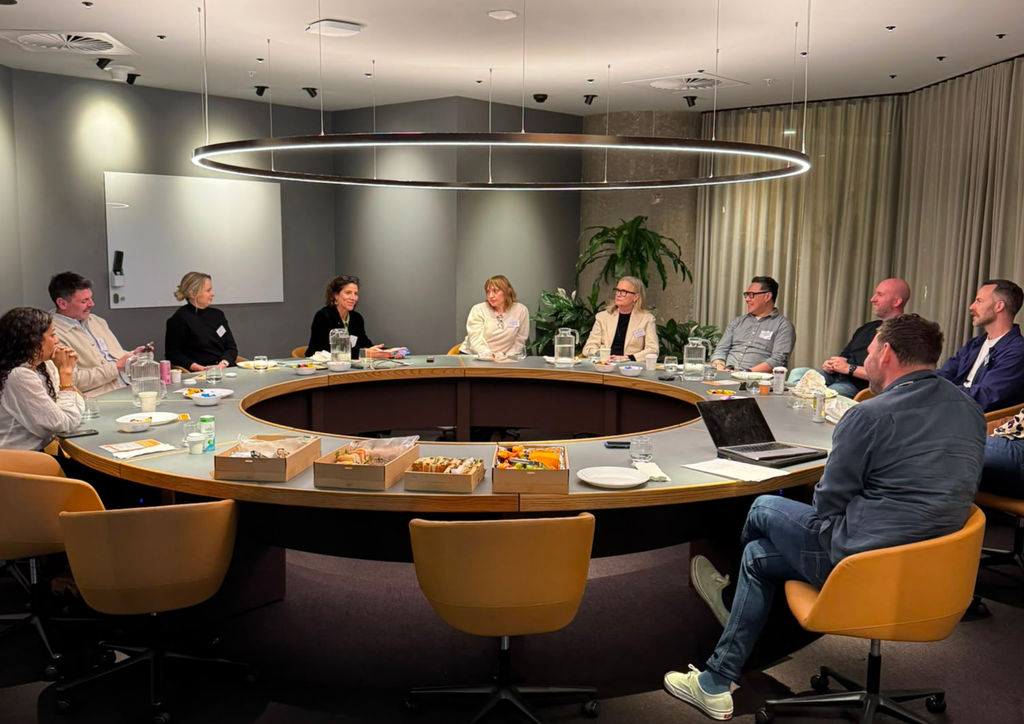
At Brightbox, we are passionate about building communities and bringing people together. Our Roundtables are an opportunity for leaders in Technology, Marketing, Product, and Design to connect, collaborate, and inspire growth.
What’s involved:
- Expert-Led Discussions: Passionate industry leaders sharing insights on the latest trends and challenges.
- Collaborative Problem-Solving: Interactive sessions focused on tackling real-world issues together.
- Networking Opportunities: A chance to connect with peers and expand your professional network.
- Exclusive Insights: Access to innovative strategies and ideas from top professionals.
To join our next roundtable event, check out our next upcoming event.
Request a copy of our
2026 Salary Guide
The 2026 Brightbox Salary Guide covers salaries, market trends, what motivates people to move, and what keeps them from leaving across design, product, data, digital marketing, and engineering.